Tips, schedule, and stock—without spreadsheet fragility
For bars that want fair pooling and steady ops in one place—weekly scheduling, shifts, cash, payouts, bar stock counts, and history—without mystery formulas or late-night file surgery. Share this with an owner or lead who’s ready to move off the shared sheet.
One system, not three tabs
Schedule, daily entry, and history stay tied to the same roles and pools—so close isn’t a scavenger hunt.
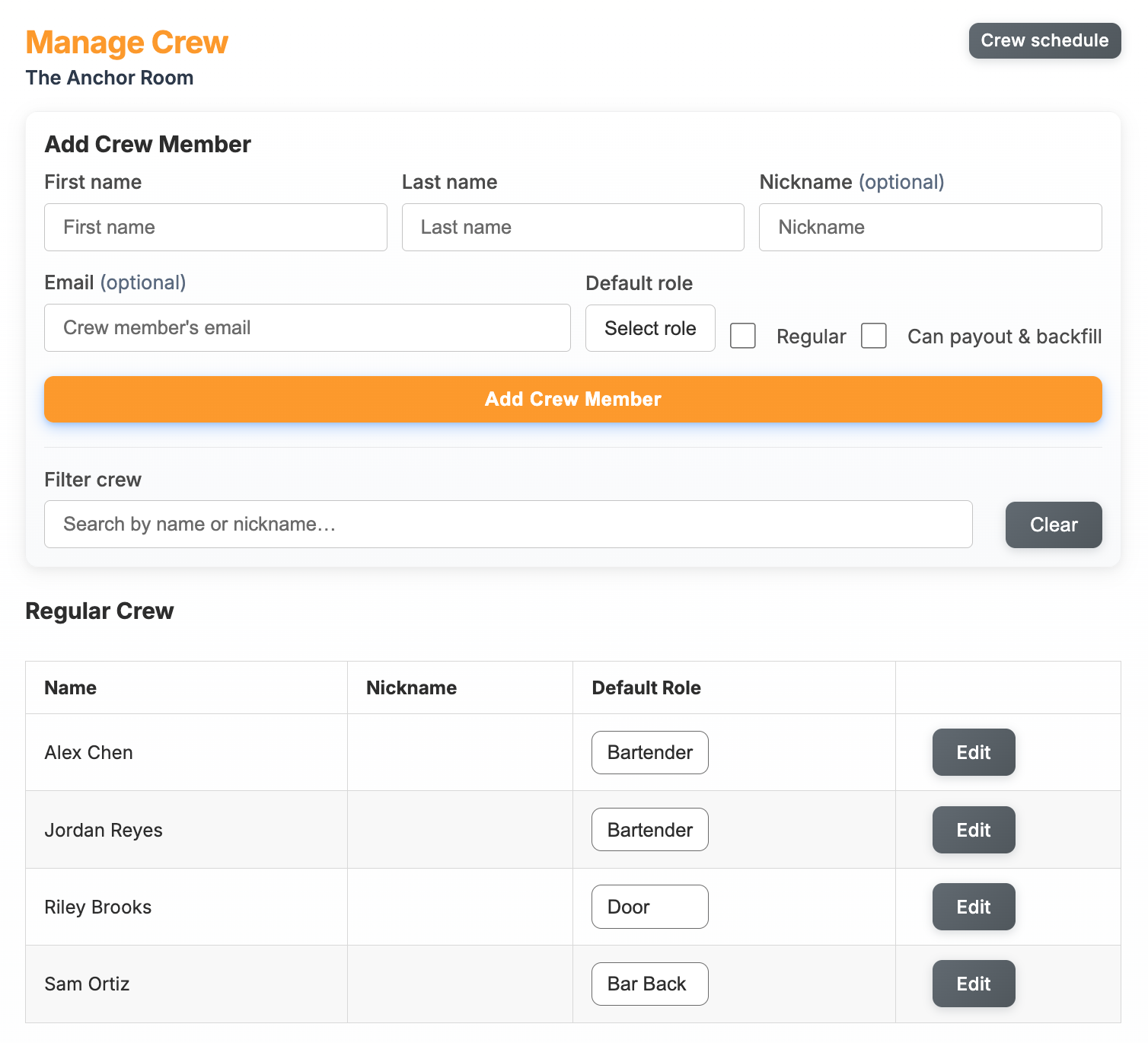
Crew and rolesKeep your roster and default roles in one place.
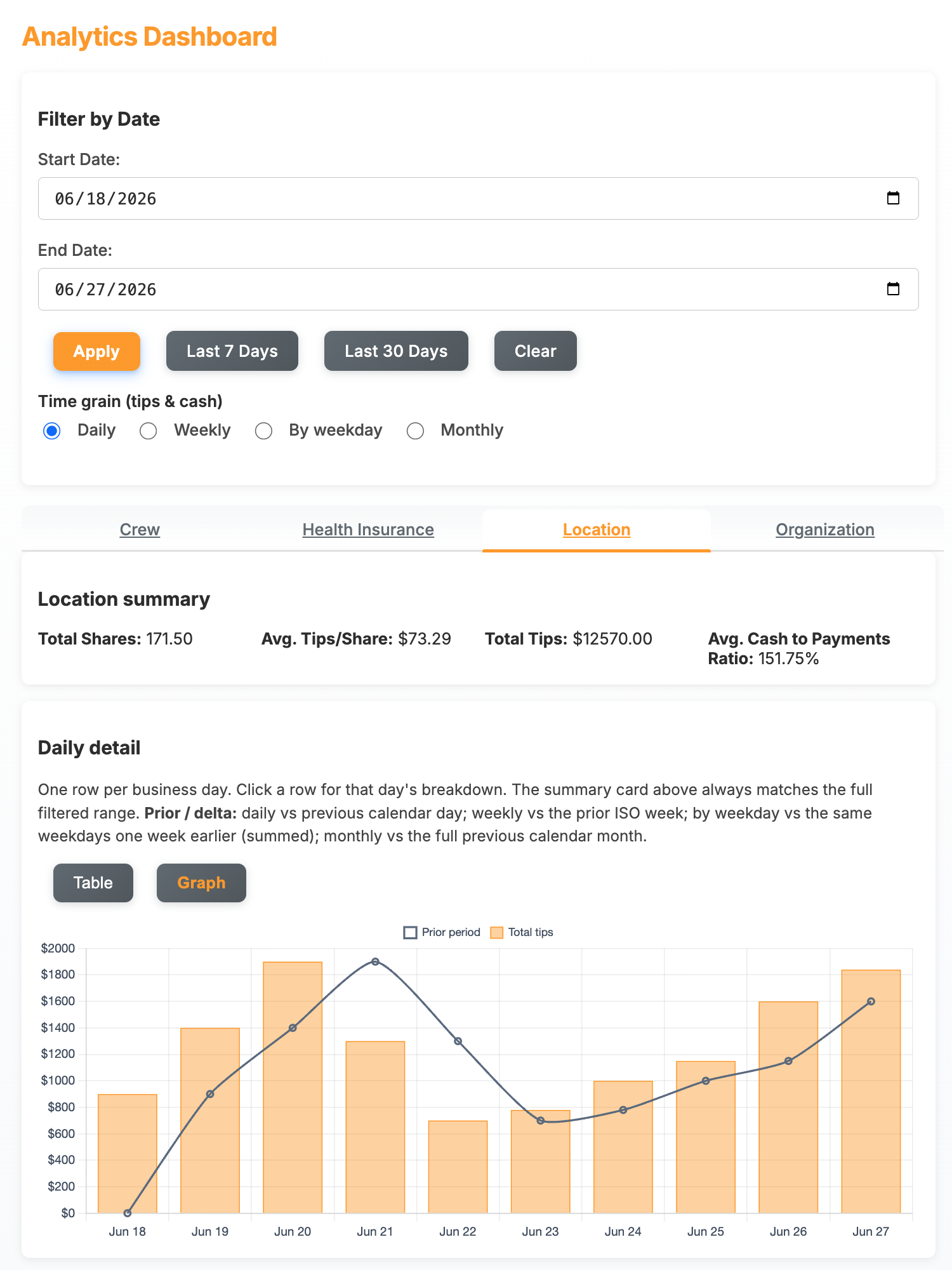
Trends from real shiftsDaily totals from the same data you enter at close—not a one-off export.
What it is
Build the week on a schedule (pools, roles, templates, time off), log shifts and hours, run pool math (shares or percentage), reconcile cash and card, run payouts with who was paid and when, and keep bar stock with par levels and counts. Crew see their history; managers see the day.
Shared sheets start simple; then logic hides in tabs, copies drift, and nobody wants to own the file at close. One bad cell skews a night—and money mistakes cost trust.
“Which tab is right?” without a single audit trail
Copy-paste and broken references that fail quietly
Schedule, tips, and inventory split across tools that never quite match at close
Time back for managers
When the model lives in the app, you re-check less and close faster—meaningful weekly savings in busy rooms, compounded over the year. One login beats chasing three “sources of truth.”
Fewer errors, clearer answers
Role and pool rules live in one system. Disputes route through history, not competing file versions.
Payouts, cash, analytics
Tips are cash on hand, what you owe next, and who’s settled—in one workflow, not a side tracker. Trends use the same data, not one-off charts.
Scheduling and bar stock in one workflow
When the schedule uses the same roles and pools as your tip math, fewer mismatches show up at close. Bar stock lives beside cash and tips so pars and counts aren’t a side file nobody trusts.
Want to try it with your crew?
Free during beta—we’re onboarding a small number of bars.